
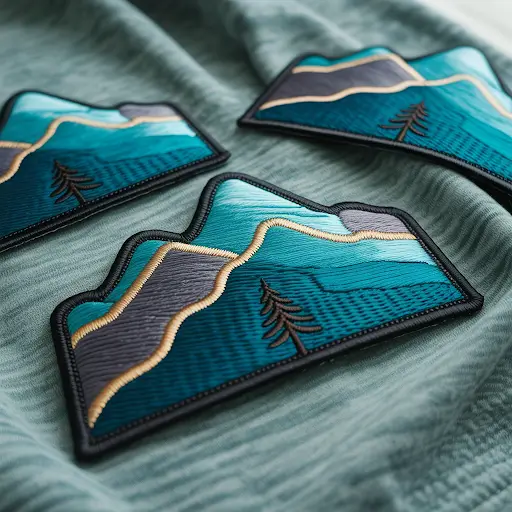
If your athleisure line’s patches feel like armor plates instead of second skin, you’ve already lost the comfort game. The new generation of performance wear doesn’t just flex; it breathes, bends, and bounces back. And if your custom patches can’t keep up with that rhythm, they’re the weakest stitch in your brand’s performance story.
Today’s customers don’t want gym gear that looks like military uniforms. They want breathable techwear that moves like a yoga flow, feels lighter than a latte foam, and still reppin’ your brand logo like it means business. That’s where the science of stretch, breathability, and patch weight optimization kicks in.
The Patch Paradox (Durable vs. Comfortable)
There’s a sweet spot between indestructible and wearable. Athleisure brands often hit a snag when they go all in on heavy embroidery or thick vinyl patches. Sure, they look premium but on a compression sleeve or leggings, that patch feels like a duct-taped logo.
To solve that, custom patch manufacturing has evolved from bulky embroidered emblems to lightweight, performance-grade materials like:
- Custom Woven Patches – Low-profile, high-flex weave for second-skin comfort.
- Custom Sublimated Patches – Breathable with vivid color that doesn’t crack under stress.
- Custom PVC Patches – Weather-resistant and stretch-compliant for outerwear or activewear.
- Custom Appliqué Patches – Ultra-soft, lightweight and often used on yoga tops and sweat-wicking tees.
These patch styles strike the balance between durability and stretch compatibility, exactly what modern activewear needs.
Testing the Fit
Let’s talk about the unsung MVP of branding R&D, performance testing. Because if your custom patches can’t survive the treadmill test, the spin class soak, and the post-wash tumble, then congratulations, you’ve just sponsored a one-wear wonder.
Athleisure is all about endurance. When your fabric stretches, your patch needs to stretch too. When your customer sweats, it should breathe. And when the whole thing hits the dryer? It better come out just as fly.
So how do top USA brands test patch performance?
- Stretch-Tensile Tests – Measures how much your patch and its adhesive flex before distortion.
- Moisture Wicking Compatibility Tests – Ensures your patch doesn’t block the fabric’s breathability.
- Wash Durability Cycles – Simulates real-world laundry conditions to test peeling or fading.
- Thermal Adhesion Tests – Evaluates heat seal and glue strength at different temperatures.
These tests aren’t just for the lab coat crowd. They’re the blueprint for deciding whether you go Custom Woven, Custom Sublimated, or Custom PVC Patches, each offering different durability and comfort outcomes.
(If you haven’t yet, read Patch Fit Guides: Best Custom Patches for Every Fabric. It’s a practical breakdown for matching patch types to your garment fabrics, exactly what’ll save you from the “peeling patch panic.”)
Breathability (Let That Skin Breathe)
If your patches trap sweat, congratulations, you’ve turned performance gear into a sauna suit. Breathability is a design metric now.
Smart athleisure brands are testing air permeability in patches, ensuring airflow consistency across garments. The secret? Micro-perforated adhesives and layered backing materials that wick moisture instead of blocking it.
When working with a custom patch maker in the USA, brands can request air mesh layering or stretchable backing adhesives that integrate with fabrics like Lycra, Dri-FIT, or Spandex blends. It’s about letting the fabric and the athlete breathe.
Stretch (The Main Builder of Patch Engineering)
“Flex on ’em” isn’t just gym slang, it’s a design requirement. The patch needs to flex with the garment, not against it.
When leggings or compression shirts stretch, a poorly designed patch either distorts or peels. That’s why leading manufacturers like Patch Makers USA have turned to stretch-rated adhesives and woven patch bases that adapt to 4-way stretch fabrics.
Here’s what top-tier brands are doing:
- Switching from embroidery to sublimation or woven designs on compression fabrics.
- Using TPU-based adhesive films that stretch 20–30% without deformation.
- Integrating heat seal backing with stretch alignment grids, ensuring the patch moves in sync with the garment’s elasticity.
So when an athlete hits a sprint or a yoga inversion, your logo isn’t the thing holding them back.
Weight Targets (Lighter Logos, Stronger Brand Impact)
Nobody wants a logo that weighs down a performance tee. Even a few grams can throw off the feel of ultralight activewear.
That’s why patch weight targets are becoming the new design KPI for apparel brands. The ideal weight for performance patches? Under 2 grams per square inch, depending on garment density.
Lightweight doesn’t mean cheap. Custom Embroidered Patches with micro-stitch patterns can deliver a premium texture without the bulk. Custom Woven or Sublimated Patches can even come under 1 gram while still maintaining durability through dozens of wash cycles.
For brands ordering bulk custom patches for uniforms or sportswear, it’s smart to run prototype trials, different patch types on the same garment, to measure comfort, stretch, and heat retention before scaling production.
Customization That Performs Like the Wearer
Performance is about how naturally it feels while lasting. When brands design their custom logo patches for jackets, bags, or leggings, the rule is simple:
If the wearer can feel it, it’s already failed the test.
Performance wear demands customization that’s invisible to the athlete but unforgettable to the eye. Think Custom Woven Patches that look embroidered but move like fabric, or Custom Printed Patches that deliver full-color branding at featherweight density.
When done right, your patch becomes part of the garment’s personality, not a logo slapped on top. That’s how premium athleisure brands earn loyalty, they make branding wearable.
Use Multiple Patch Styles Across Lines
Smart athleisure brands don’t limit themselves to one patch type. They use Custom Embroidered Patches on structured hoodies, Custom Woven Patches on tees, and Custom Printed Patches on stretchy tights.
This way, every product feels optimized while still keeping a unified brand identity. Plus, it allows flexibility for seasonality, lighter patches in summer, thicker textures for winter collections.
(And if you’re still battling winter adhesion issues, Patch Makers USA already has your back with Stop Patch Peeling in Winter: Cold-Weather Adhesion Guide.)
FAQs
Q1: What makes a performance wear patch different from a regular custom patch?
Performance wear patches are engineered for flexibility, breathability, and minimal weight. Unlike standard patches, they’re designed to move with athletic fabrics, resist sweat, and maintain adhesion during intense motion or frequent washing.
Q2: Which materials are best for lightweight custom patches on athleisure?
Woven and sublimated patches are top picks for athleisure. They’re smooth, thin, and maintain stretch and airflow, ideal for yoga wear, active gear, or compression apparel.
Q3: How can I make sure my patch doesn’t peel during workouts or washing?
Choose stretchable heat seal adhesives and ensure proper fabric compatibility. Brands like Patch Makers USA also run stress, wash, and adhesion tests to guarantee long-lasting results.
Q4: Can performance patches still look premium and detailed?
Absolutely. Techniques like sublimation and woven threading achieve intricate designs while keeping patches featherlight. You can even combine materials for a luxe-meets-active effect.
Spec Your Performance Patches
Patch Makers USA makes that easy. Whether you’re designing Custom Embroidered Patches, PVC Patches, or Woven Performance Patches, their team helps you spec for stretch, weight, and airflow that matches your apparel’s needs.
Need expert help choosing materials or testing options? Contact Patch Makers USA for free patch consultations, samples, and quotes. Because your brand deserves to perform active.
