
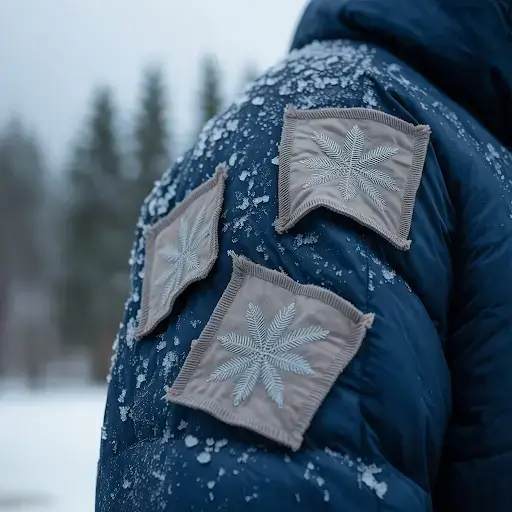
You know that sinking feeling, your team’s brand-new jackets show up, decked out in slick custom patches, everyone’s looking sharp… until two days into the cold snap, those same patches start peeling at the corners like a bad sticker job. Yeah, not the vibe.
This isn’t a “bad luck” situation. It’s physics, chemistry, and a lack of cold-weather prep in your patch specs. Heat seals that work fine in summer can straight-up ghost you once temps dip below 40°F. Adhesives harden, fibers resist bonding, and suddenly your “durable” patch is hanging on by a thread.
So, let’s unpack why cold weather makes patches fail and how smart brands, apparel makers, and merch teams can spec around it, without killing the look, comfort, or cost.
Adhesion Physics 101 (The Cold Truth)
When you apply heat seal patches, you’re essentially melting a thin adhesive layer into the fibers of your fabric, creating a mechanical and chemical bond. But when temperatures drop, a few things happen:
- Adhesive polymers stiffen up.
Below ~40°F, most standard patch adhesives start losing flexibility. They don’t melt evenly, and when you press them onto a cold substrate, they don’t “wet out” (aka spread and grip) properly. - Condensation is the silent killer.
Cold fabric + warm air = moisture. Even a light film of condensation between your patch and the fabric can nuke your adhesion. - Textile density and weave change with temp.
Certain synthetics like nylon and polyester shrink slightly in cold air, tightening their weave. That means less surface area for the glue to grip.
If you’ve ever wondered why that “guaranteed strong” adhesive seemed to flake in your warehouse uniforms or team jackets, you’re now looking at the culprits.
Cold Is a Patch Killer (Especially for Certain Materials)
Not all custom patches react the same to the cold.
- PVC patches — they’re flexible, waterproof, and great for tactical or outdoor gear. But their adhesion depends heavily on heat application. If the base material or air is cold, you’ll get spotty bonding.
- Embroidery patches — often thicker and layered, which means you need longer press times and consistent surface heat.
- Woven or sublimated patches — thinner, easier to seal, but they still hate cold moisture.
So, if your brand’s gear sees a lot of time outdoors, especially in the Midwest or Northern states, you’ll want to spec your materials and adhesive accordingly.
Why Businesses Should Care (Even If They Don’t Apply Patches Themselves)
If you’re a small business ordering bulk custom patches, a brand designing merch, or a corporate team speccing uniforms, it’s about ROI.
Every failed patch means wasted cost, reorders, and lost brand perception. If your logo’s falling off a jacket, it’s not just a quality problem, it’s a visibility one.
You wouldn’t buy marketing banners that fade in the sun, so don’t buy custom patches that tap out in the cold.
And while we’re talking cold-weather style, if you haven’t already seen it, check out our post on Custom Patches for Hoodies | A Stylish Trend for Cold Weather Fashion. Because when done right, patches in the cold slay.
Heat Seal vs. Sew-On (The Great Winter Debate)
Heat seal patches are a crowd favorite for speed and clean application, no thread, no needle, no problem. But when winter hits, that convenience can turn on you.
- Heat seals depend entirely on temperature transfer. If your garment’s cold, your adhesive won’t fully activate.
- Sew-ons don’t care if it’s 20°F or 120°F, they’re mechanically secured.
That doesn’t mean ditching heat seals altogether. It just means smart spec’ing: combining or adapting backings to suit your environment. For instance:
- Choose hybrid backings, heat seal + border stitch.
- Opt for industrial-grade adhesives rated for sub-40°F temps.
- Pre-warm garments before pressing to ensure better bonding.
If you’re ordering from a USA patch company with free shipping, like Patch Makers USA, their production team can help spec your patch backing for your intended use, especially if you’re shipping merch to cold-weather states.
Spec Around the Freeze (Smart Choices That Actually Work)
Here’s what separates “budget patches” from the best place to order custom patches: spec’ing that anticipates stress, temperature, and wear.
- Use low-temp bonding adhesives.
Ask your patch maker for adhesive films rated for -10°F to 140°F. These maintain tackiness even in cold conditions. - Layer it right.
For embroidered patches, use a thermal barrier film between the backing and adhesive to control heat transfer. - Add edge stitching.
Especially on high-movement apparel like jackets and hoodies. This backup stitching takes the stress off the adhesive line. - Go for pre-treated fabrics.
Cold-weather materials like coated nylon can resist bonding. Pre-treat or roughen slightly to help adhesion. - Always test.
A 10-second pull test after sealing can tell you instantly if your patch bonded properly.
These are small moves that make big differences when you’re ordering custom embroidered patches USA or designing performance-based outerwear.
Material Matchmaking: What Works, What Doesn’t
You can’t slap a heat seal on just anything and call it a day.
| Fabric Type | Cold Adhesion Rating | Recommended Patch Type |
| Cotton | Four Star Rating | Embroidered, Woven |
| Polyester | Three Star rating | Sublimated, PVC |
| Nylon | Two Star Rating | Sew-on or Hybrid |
| Fleece | Four Star Rating | Embroidered, Appliqué |
| Leather | One Star Rating | Sew-on only |
If you’re working with custom logo patches for jackets or custom patches for hoodies, you’ll want to stick with fabrics that can handle both the heat press and the cold, fleece and cotton blends are your best bet.
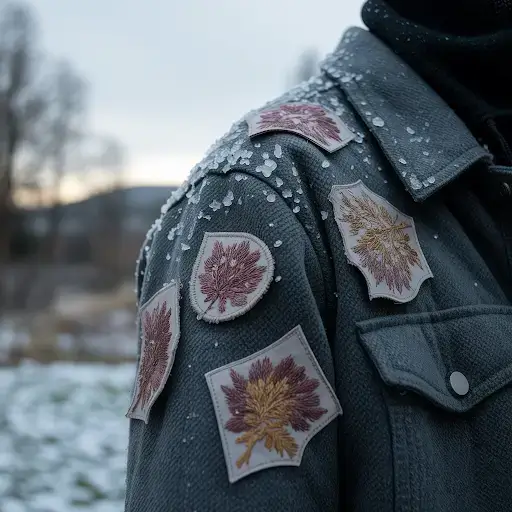
How Brands Can Test Their Own Patches (Without a Lab)
If you’re serious about quality control or your brand’s outerwear collection, here’s how to “stress test” your patches like a pro before production:
- Freeze Test:
Store samples at 35°F for 48 hours, then bend and flex the fabric. Look for corner lift or stiffness. - Abrasion Test:
Rub against denim or canvas 100 times (simulate jacket friction). No peeling? You’re golden. - Moisture Test:
Lightly mist the patch and press with a paper towel, if the edge darkens or softens, your seal’s weak.
This kind of quick validation gives you a snapshot of real-world performance before you commit to bulk orders. It’s exactly how top apparel brands spec custom patches for uniforms, corporate jackets, and branded merch that doesn’t give up when it gets cold.
And if you’re ordering through a custom patch maker near me search, make sure you’re not settling for “heat seal included”, ask about cold-weather adhesive rating or hybrid bonding options.
Hybrid Heat Seals (The Fix for Sub-40°F Environments)
This is where things get fun and practical.
Hybrid patches (a mix of heat seal and stitched or Velcro backings) are the secret sauce for brands that deal with temperature swings or heavy-duty wear.
Let’s break down your options:
- Heat Seal + Border Stitch: The gold standard for outerwear. Adhesive gives you that clean finish, while stitching locks it down permanently.
- Velcro Backing: Ideal for tactical gear, event uniforms, or cold storage workers who swap patches out.
- PVC Patches + Adhesive Film: Keeps flexibility in cold temps, perfect for winter sports or work jackets.
- Sew-on Reinforcement: Adds weight, but guarantees long-term durability, especially for custom biker patches for jackets or heavy denim.
These combinations make your patches bulletproof or at least cold-proof.
Learn from the Greats (Smart Spec’ing in Action)
Let’s say your brand’s launching a winter collection, fleece-lined hoodies, puffer jackets, or team windbreakers. You want that embroidered logo patch on everything.
Here’s how pros spec it:
- Use Custom Embroidered Patches with low-temp adhesive film.
- Add stitched edge reinforcement for high-motion areas.
- Match adhesive to fabric base, cotton, fleece, or synthetic blend.
- Conduct pre-production press tests at 40°F to simulate real-world usage.
That’s not “extra work.” That’s how you ensure your patches actually survive a Chicago February.
And hey, if you’re looking for inspiration or patch styling cues, check out our guide on Best Patch Backings Ranked: Pull-Test Guide for Brands. Because the right backing can make or break your adhesion.
FAQs
Q1. Why do heat seals fail in cold weather?
Cold temperatures cause adhesives to lose flexibility and bonding strength. When the temperature drops below 40°F, the glue layer can harden before properly bonding to the fabric, leading to corner lift or full patch failure.
Q2. How can I make my custom patches stick better in cold temperatures?
Use hybrid applications like heat seal + border stitch or Velcro backings and adhesives rated for low-temperature performance. Always preheat garments before applying patches in cold conditions for stronger adhesion.
Q3. What is the best patch backing for cold-weather apparel?
For jackets and outdoor gear, a hybrid heat seal with a stitched edge or Velcro backing works best. These options balance flexibility, strength, and long-term hold even below 40°F.
Q4. Are there special adhesives for cold-weather custom patches?
Yes. Cold-weather adhesives are formulated to maintain tack and flexibility at low temperatures. Patch Makers USA uses premium adhesive films tested for performance under 35–40°F conditions.
Q5. How do I test patch adhesion before bulk production?
Conduct freeze, moisture, and abrasion tests. Store patches at 35°F for 48 hours, flex them, and check for corner lift or stiffness. It’s a quick way to validate real-world durability before committing to a full run.
Q6. Can I still use heat-seal patches for winter jackets or hoodies?
Absolutely. When paired with proper adhesive films and preheat steps, custom embroidered patches for hoodies and jackets perform well in winter, especially with hybrid sealing.
Cold Isn’t the Enemy But Bad Specs Are!
So, next time someone says, “Our heat seals just don’t stick in the cold,” you’ll know the truth, it’s not the cold’s fault, it’s the setup.
Because the brands that look good and stay together through the freeze? Yeah, those are the ones people remember.
And when you’re ready to make your winter line stick, get your custom patches with Patch Makers USA, your go-to USA#1 Custom Patch Manufacturer.
