
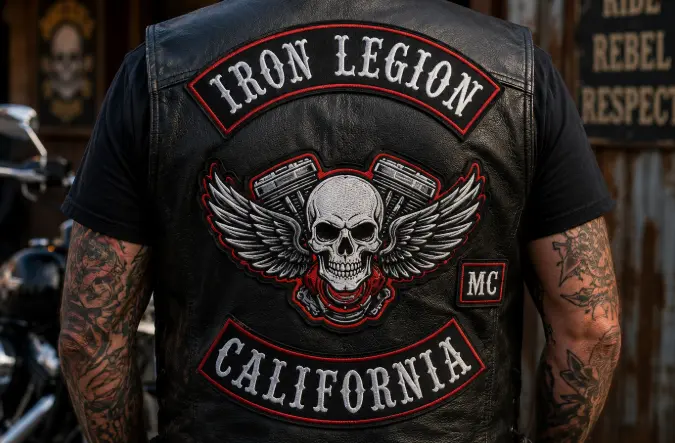
Vest patches serve different purposes depending on the vest type. On motorcycle and biker vests, patches indicate club affiliation, rank, territory, and personal identity. Placement follows strict cultural rules.
On tactical vests, patches provide identification with Velcro-swappable convenience. On denim and fashion vests, patches express personal style with no formal rules. The right patch, right placement, and right attachment method vary by context.
Why Vest Patches Are Different from Jacket or Shirt Patches
Unlike jackets or shirts, vests provide a broad, uninterrupted surface that makes vest patches more visible and visually impactful. A vest functions almost like a wearable canvas, giving wearers more flexibility for arrangement, layering, and storytelling through patches.
Because vests lack sleeves, the back becomes the primary display area. This is especially important for motorcycle vest patches, where the back panel often carries the most significant emblem or club identity. On fashion or tactical gear, the back can become a bold statement area for artwork, identification, or branding.
The absence of sleeves also changes the visual balance. Placement decisions on patches for vests carry more weight because every patch is highly visible from multiple angles. A poorly placed patch can throw off the entire look of the vest, while a well-designed layout creates hierarchy and readability.
The culture surrounding vest patches spans several distinct worlds:
- Motorcycle clubs and biker culture
- Tactical and military gear
- Fashion and streetwear
- Organizational and workwear applications
Each of these categories has its own expectations and rules. Some are deeply traditional and structured, especially in MC culture. Others are purely aesthetic, like vest patches for fashion. Tactical applications prioritize functionality, while work vests focus on branding and identification.
Motorcycle and Biker Vest Patches: The Culture, the Rules, and What Everything Means
The Vest as a “Cut”: What it Represents
In motorcycle culture, a sleeveless leather or denim vest displaying club colors and insignia is commonly called a “cut” or “colors.” These biker vest patches are more than decoration. They communicate identity, rank, loyalty, and history.
A well-designed cut can tell an experienced rider almost everything about the wearer from a distance. Club affiliation, chapter location, memorial tributes, achievements, and status can all be identified through the arrangement of motorcycle vest patches.
The popularity of the kutte vest patches aesthetic has expanded far beyond biker culture into mainstream fashion and streetwear. However, within genuine MC culture, the meanings behind patch placement remain serious and respected traditions.
Motorcycle Club (MC) vs Riding Club (RC) Critical Distinction
One of the most misunderstood parts of biker culture is the difference between a Motorcycle Club (MC) and a Riding Club (RC). Many online articles incorrectly combine the two, but the distinction matters greatly when designing custom vest patches.
A Motorcycle Club (MC) is a formal organization with rules, bylaws, structured membership processes, and hierarchy. Membership is earned through prospect periods and approval systems. In MC culture, MC cut patches and full club colors are not purchased casually. Instead, they are earned.
A Riding Club (RC), by comparison, is generally more social and relaxed. RCs often focus on group rides and community rather than strict hierarchy. Their riding club patches are usually simpler and most commonly use a one-piece design.
Independent riders exist outside both categories. They may wear motorcycle vest patches, humorous designs, memorial tributes, or personal artwork without club affiliation. However, understanding MC traditions is still important because some designs can unintentionally resemble official club colors.
Wearing a club-style 3-piece patch setup without legitimate affiliation is widely considered disrespectful within biker culture and may create serious conflict.
The 3-piece Back Patch System: What Each Part Means
The classic back patch for vest design in motorcycle culture is the 3-piece system.
This layout consists of:
- Top rocker
- Center patch
- Bottom rocker
The top rocker displays the club name in an arched format. The center patch contains the main emblem or symbol of the club. The bottom rocker identifies the chapter location or territory.
The top rocker bottom rocker patch arrangement is the defining feature of traditional MC colors.
A two-piece layout usually includes only the top rocker and center emblem. This can indicate a developing club or certain RC structures.
A one-piece design is the most common setup for riding clubs and independent riders.
The answer to the common question “What is the 3-piece motorcycle patch meaning?” is simple: it signifies formal MC membership and club identity.
Because of the cultural importance of the center patch vest format, independent riders should avoid imitating official MC layouts unless they fully understand local biker culture.
Front Panel Placement: What Goes Where
Understanding proper placement is one of the most searched topics related to vest patch placement guide queries.
On most biker cuts:
- Right chest: role or rank patch
- Left chest: name patch or callsign
- Front panels: support patches, event patches, memorial tributes
- Shoulder areas: chapter tabs or smaller identifiers
- Side panels: commemorative or personal patches
Common role identifiers include:
- President
- Vice President
- Sergeant at Arms
- Road Captain
- Treasurer
- Secretary
The general rule for motorcycle vest patch placement rules is simple: the most important patch gets the most prominent location.
Support Patches: What They Are and Where They Go
Support patches vest designs allow riders to show support for a club without claiming membership.
These typically feature phrases like the following:
- “Support Your Local”
- Club support slogans
- Support color combinations
Support patches are normally worn on front panels rather than the back. This prevents confusion with official club colors.
Memorial Patches: Honoring Fallen Riders
Memorial patches vest designs are extremely common among experienced riders. These patches honor friends, family members, or fellow riders who have passed away.
Most memorial patches include the following:
- Rider name
- Birth and death years
- Symbolic artwork
- Wings, crosses, skulls, or motorcycles
Placement is usually on front chest panels or side sections of the cut.
What Not to Wear: Etiquette and Safety
Certain patches carry serious meaning and should never be treated as fashion.
The 1% patch meaning refers to outlaw motorcycle club identity. Wearing a 1% diamond patch without affiliation is highly disrespectful.
Similarly, reproducing official club colors, copying existing club designs, or wearing unauthorized MC-style 3-piece sets can create real-world conflict.
As a rule: if a patch suggests membership, rank, or status you did not earn, avoid wearing it.

Denim Vest Patches: Fashion, Punk, and DIY Culture
Denim as a Patch Canvas
Denim vest patches are among the most versatile patch applications available. Denim is durable, easy to sew, and compatible with nearly every patch backing type.
In punk and metal scenes, patched denim vests are often called battle jackets. These heavily customized garments become personal timelines filled with music, travel, politics, humor, and identity.
Denim works exceptionally well for the following:
- Sew-on patches
- Iron-on patches
- Woven patches
- Embroidered patches
- PVC patches
Lighter denim generally benefits from darker or high-contrast patch designs. Dark denim works especially well with bold embroidered artwork.
Unlike biker culture, there are no rigid rules for vest patches for fashion.
Placement approaches for fashion/denim vests
Placement styles vary dramatically depending on the aesthetic.
Popular approaches include:
- Large statement back patch
- Gradually filled front panels
- Minimal curated layouts
- Full-surface maximalist coverage
Many people begin with a single large back patch for vest layouts and slowly add smaller pieces over time.
Others prefer a clean arrangement with only a few highly visible custom vest patches placed strategically.
Patch Types That Work Best on Denim
Several styles of patches for denim vest applications work particularly well:
- Embroidered patches for classic texture
- Woven patches for detail-heavy logos
- Printed patches for full-color artwork
- PVC patches for weather resistance
Denim is extremely forgiving, making it ideal for experimentation and DIY projects.
If permanence matters, sewing is recommended. Iron-on works for casual wear but may loosen over time.
Leather Vest Patches: MC Tradition and Attachment Rules
Leather as a Patch Surface
Leather remains the traditional material for formal biker cuts and many motorcycle vest patches.
The dark surface naturally creates strong contrast with bright embroidery and bold borders. Leather also gives patches a more serious and authoritative appearance than denim.
However, leather requires careful planning. Once a patch is sewn and removed, visible holes often remain.
That means placement decisions for patches for leather vest applications should be finalized before sewing begins.
How to Attach Patches to Leather: What Works and What Does Not
One of the most searched questions online is how to attach patches to a leather vest.
The correct answer is sewing.
For proper installation:
- Use leather needles
- Use heavy-duty polyester or waxed thread
- Hand stitch carefully or use industrial machines
- Avoid standard household needles
Many people ask whether iron-on patches work on leather.
The answer is no.
Iron-on adhesives require heat that can permanently damage leather. The glue also does not bond correctly to leather surfaces.
So if you are searching for how to put patches on a vest made of leather, sewing is the only reliable long-term method.
Additional leather sewing tips include:
- Never use pins
- Use binder clips or tape for positioning
- Consider professional installation for thick leather
- Use upholstery-grade thread for durability
When learning how to sew a patch on leather, preparation matters just as much as stitching technique.
Tactical Vest Patches: Velcro Panels and Functional Identification
Tactical and Plate Carrier Vests
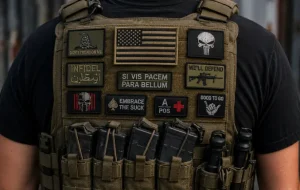
Unlike traditional biker cuts, tactical vest patches are designed for flexibility and fast swapping.
Modern tactical vests and plate carriers include hook-and-loop panels specifically intended for interchangeable patches.
This creates an entirely different patch culture from motorcycle traditions.
Common tactical patch types include:
- Flag patches
- Blood type patches
- Unit identifiers
- Name tapes
- Morale patches
The standard size for many morale patches tactical vest applications is approximately 2”×3”.
Patch Types for Tactical Vests
Popular tactical vest patches include:
- IR reflective patches
- PVC patches
- Embroidered velcro patches
- Subdued camouflage designs
PVC patches are especially popular because they resist moisture, dirt, and weather exposure.
For tactical users searching for tactical vest patch placement, visibility and readability matter more than aesthetics.
Placement on Tactical Vests
Typical placement areas include the following:
- Front panel for identification
- Shoulder panels for rank or callsigns
- MOLLE-compatible loop panels
- Upper chest sections
The guiding principle is functionality first.
Work and Organizational Vest Patches: Staff, Event, and Brand Identity
Many industries use work vest patches for identification and branding.
Common applications include:
- Construction crews
- Event staff
- Security teams
- Hospitality staff
- Volunteer organizations
Typical layouts include:
- Company logo on chest
- Name patch on left chest
- Department or role patch on right chest
- Safety certification patches
Velcro systems are especially popular because they allow names and roles to change without replacing the vest.
Businesses frequently order custom embroidered patches to create a consistent and professional team appearance.
How to Choose the Right Patch Type for Your Vest
| Vest Type | Best Patch Style | Best Backing | Notes |
| Leather biker vest | Embroidered | Sew-on only | Iron-on damages leather |
| Denim biker vest | Embroidered or woven | Sew-on preferred | Best for long-term wear |
| Denim fashion vest | Any style | Iron-on or sew-on | Maximum creativity |
| Tactical vest | PVC or embroidered | Velcro hook backing | Swappable system |
| Work vest | Embroidered or woven | Velcro or sew-on | Velcro ideal for changing names |
| Scout vest | Embroidered | Sew-on or iron-on | Traditional standard |
Patch Sizes: What Works Where on a Vest
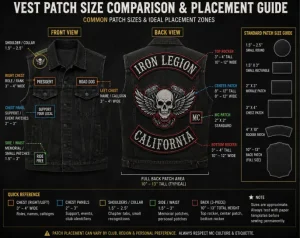
Patch sizing dramatically affects readability and balance.
Standard recommendations include the following:
- Full back patches: 10”–13” tall
- Smaller center designs: 7”–9”
- Front chest patches: 3”–4” wide
- Small statement patches: 2”–3”
- Shoulder patches: 1.5”–2.5”
- Name patches: 1”×4” or 1”×5”
Most rocker patches span roughly 10”–12” wide.
A practical rule for vest patches is readability from 10–15 feet away.

Design Tips for Vest Patches: What Makes Them Work
Successful custom vest patches rely on smart visual planning.
Key principles include:
- Strong contrast improves readability
- Simple designs scale better
- Consistent borders create unity
- Too many focal points create clutter
- One anchor patch should dominate the layout
Before sewing anything permanently, map the entire arrangement first. Many experienced patch collectors use paper templates to preview spacing and sizing.

Ordering Custom Vest Patches: What to Know
At Patch Makers USA, custom vest patches and large biker back patches are among the most frequently requested products.
Customers commonly order:
- Full-size MC-style back patches
- Small chest patches
- Event commemorative patches
- Tactical velcro patches
- Work identification patches
When ordering custom patches for motorcycle club vest applications, provide:
- Top rocker wording
- Center emblem concepts
- Bottom rocker text
- Preferred colors
- Size specifications
Vector artwork such as AI, EPS, or PDF files produces the cleanest embroidery results, though sketches and photos are often acceptable.
Backing recommendations:
- Sew-on for leather
- Sew-on or iron-on for denim
- Velcro hook backing for tactical applications
Most manufacturers offer:
- No minimum quantities
- Rush production options
- Free design assistance
Frequently Asked Questions
What is the correct placement for patches on a motorcycle vest?
A motorcycle club vest features some of the key patches on the back side: top rocker (name of the club, arched), center patch (logo of the club), and bottom rocker (chapter/territory, arched). On the front side, patches include role/rank (on right chest) and name patches (on left chest) plus small patches. Shoulders and side patches have small personal patches. Independent riders enjoy more flexibility in wearing their patches.
What does a 3-piece back patch on a vest mean?
The presence of a 3-piece back patch means that one belongs to an organized motorcycle club. This includes a top rocker, which features the club’s name; a center patch, featuring its emblem; and a bottom rocker, which usually shows the chapter’s name or its territorial location. This design comes as a result of becoming a member of such a club in an official way. You cannot buy this set. Using the 3-piece patch set without proper affiliation causes a huge misunderstanding among bikers.
How do you attach patches to a leather vest?
It is only possible by employing the method of stitching. It should be done by employing a leather needle, which may either have a wedge shape or a sharp end. Tough polyester or waxed thread should be used. This should be done manually or on a heavy-duty sewing machine, ensuring that the foot pressure setting is set to low. No iron-on adhesive should be employed, as heat damages the leather.
Can you iron-on patches to a leather vest?
Heat-sensitive patches cannot be used since the heat might burn the leather. Also, the adhesive does not stick well to leather. The proper procedure for attaching the patches to leather vests would be through sewing. On the other hand, in case the jacket is made of denim, then the use of heat-sensitive patches is ideal.
How big should a back patch be on a vest?
A majority of fullback patches are made 10″-13″ in height to fit the panel. The smaller back patch does not give a well-proportioned look compared to the vest. An example of a standard fullback vest patch is between 10″ and 12″ in width, with height being proportional to the design itself. For the larger vest, such as the fashion vest, a single statement patch should be about 8″-10″.
What is the difference between a motorcycle club patch and a riding club patch?
A motorcycle club (MC) patch represents formal membership in an organized club with a defined membership process, bylaws, and hierarchy. These patches are earned, and their 3-piece format is specific to formal clubs. A riding club (RC) patch represents membership in a more casual, social riding group with open or less formal membership. RC patches typically use a 1-piece format and can be purchased by members. Independent riders wear patches representing personal identity: no club structure involved.
What patches work best on a denim vest?
Denim accepts almost all patch types and backings. Embroidered patches are the classic choice. Their raised texture contrasts well with flat denim. Woven patches work for finer detail. PVC patches add an interesting texture contrast. Iron-on backing is acceptable for casual denim vests; sew-on is better for any patch you want to wear for years without lifting. Large back patches and a gradually built front collection are both valid approaches to a denim vest layout.
What size patches go on the front of a vest?
Front chest patches are typically 3″–4″ wide for primary role or name patches and 2″–3″ for smaller personal patches, morale patches, or event patches. Keep front patches readable from a conversational distance (5–8 feet). Name patches in standard nameplate format (1″×4″ or 1″×5″) are common across MC, work, and event vest applications. Avoid crowding the front panels. Strategic spacing makes individual patches more readable and impactful.
Can anyone order custom patches for their vest?
Yes. Custom vest patches are available to order for any purpose: personal expression, riding club identity, event commemoration, fashion, workwear, or tactical applications. What you cannot do is reproduce the official colors of an existing MC without their authorization. Any original design, riding club logo, event patch, or personal design is fair game. Most manufacturers offer free design services, have no minimum orders, and can produce patches in any size from small chest patches to full back panels.
Get Ready to Design Your Perfect Vest Patches
Whether you are building a traditional biker cut, customizing a denim battle vest, outfitting a tactical rig, or branding a professional work uniform, the right vest patches make all the difference.
From proper motorcycle vest patch placement rules to durable patches for leather vest applications and creative vest patches for fashion, every detail matters when creating a vest that looks sharp and tells your story.
We at Patch Makers USA produce all types of custom vest patches, customized according to your needs and in any style you want. Be it embroidery, weaving, PVC patches, velcro, sew-on, and many more, without any order minimums.
Explore our custom motorcycle patches, custom embroidered patches, and custom PVC patches services today and create patches built specifically for your vest and your style.
