
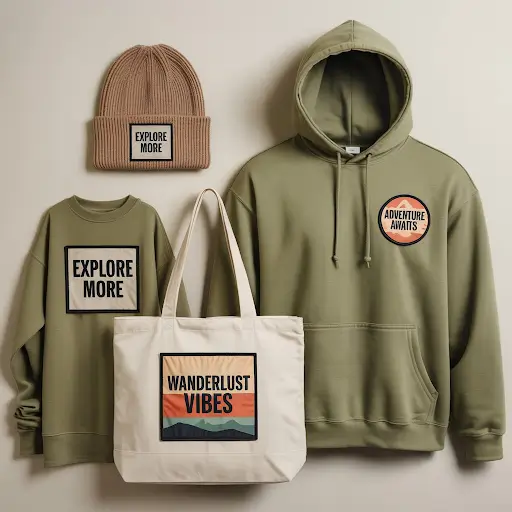
Great Custom Patches don’t save a bad placement. The cleanest embroidery, crispiest PVC, or bougie leather still falls flat if you slap it on the wrong spot or the right spot at the wrong size.
This cheat sheet gives you tested, garment-specific placement templates so your hoodies, beanies, cargo pockets, and backpacks look dialed-in, day one. Save it, share it, screenshot it, this is the blueprint your design, ops, and retail teams can all agree on.
If embroidery is your workhorse, keep this spec hub handy for stitch coverage, borders, and backings: Custom Embroidered Patches. It pairs perfectly with the templates below, especially when you need fast turnaround custom patches USA without guesswork.
For micro-detail logos (seals, tiny type on hats), skim Custom Woven Patches, you’ll get cleaner edges at smaller sizes and lower stitch counts.
Also worth a look if you’re playing in the varsity lane: Varsity Letterman Jacket Patches Placement: Types Of Patches & Where And How To Place Them for shoulder/yoke logic you can borrow for hoodies and coaches jackets.
Hoodie Templates (Pullover & Full-Zip)
Primary goals: quick logo read at 6–10 feet, no warping over seams, comfortable wear on fleece.
Best patch styles:
- Embroidery for textures and bold logos
- Woven for micro detail (small type)
- Leather/PU for heritage lines
- PVC for outdoor/athleisure durability
Front Left Chest (FLC):
- Size: 2.5″–3.0″ wide (keep height proportional)
- Placement: 3.0″ down from shoulder seam; 2.5″ in from center line
- Backing: Heat-seal (cotton blends) or sew-on for heavy fleece. Avoid thick PVC over the heart if the garment is tight, it can feel stiff.
- Border: Satin (embroidered) or laser-cut edge (woven). Leather/PU likes a 1–2 mm stitch border for longevity.
Kangaroo Pocket Corner:
- Size: 1.5″–2.0″
- Placement: Upper right corner of pocket, 0.5″ from pocket seam and 0.5″ from hem seam.
- Note: Keep it small so hands don’t rub the edge constantly.
Sleeve Badge (left sleeve = most photographed):
- Size: 1.75″–2.25″ round or 2.0″ square
- Placement: Centered 3.5″ above cuff seam
- Backing: Sew-on for motion durability. Velcro works if you want swap-outs (teams, seasonal “event-only” patches).
Full-Zip Rule: Never bridge the zipper. Split designs look messy. Stick to FLC or sleeve.
Beanie Templates (Cuffed & Uncuffed)
Primary goals: visibility on a small canvas, comfort (no forehead pokes), and fold alignment.
Best patch styles:
- Woven patches or small embroidered for clarity
- Leather/PU for premium winter lines
Cuffed Beanie Front Center:
- Size: 2.0″–2.75″ wide, max 1.25″ tall
- Placement: Centered on cuff, bottom flush with cuff edge (don’t ride up the ribbing too high or it warps)
- Backing: Sew-on recommended. Heat-seal often fails on thick knits.
- Pro move: Add a satin underlay behind knit before sewing to prevent tunneling.
Side Tab (streetwear look):
- Size: 1.0″–1.5″ tall, 0.5″–0.75″ wide
- Placement: Right side of cuff, 1.25″ from seam
- Style: Woven folded label or micro leather tab with deboss logo.
Uncuffed Beanie:
- Use a front-center patch 2.0″–2.25″ wide, sew-on only. Keep it soft, no thick PVC that creates a cold spot.
Cargo Pocket Templates (Pants & Utility Shorts)
Primary goals: function + flex. Patches shouldn’t snag or interfere with pocket use.
Best patch styles:
- Embroidery with satin/merrow edges for durability
- PVC patches for tactical/outdoor (sweat, rain, abrasion)
- Woven for crisp branding strips
Flap Center Badge:
- Size: 2.0″–2.5″ round/square or 2.75″ x 1.0″ rectangle
- Placement: Center of flap, 0.5″ above flap bottom edge
- Backing: Sew-on or Velcro if you want swappable units (great for custom military patches USA or workwear IDs).
Pocket Side Strip (vertical):
- Size: 3.0″–3.75″ tall x 0.75″–1.0″ wide
- Placement: 0.5″ from side seam, centered vertically on pocket body
- Note: Use woven for legibility. PVC here can catch on brush; consider low-profile edges.
Knee/Thigh Accent (for moto/outdoor):
- Size: 3.0″–3.5″ oval
- Placement: 2.0″ above knee seam, outer thigh
- Warning: Don’t place where it will crease on squat. Test with a wear mockup.

Backpack Templates (Daypacks & Totes)
Primary goals: front-panel read from 10–15 feet, no interference with zips/straps, scuff resistance.
Best patch styles:
- PVC (waterproof, scuff-proof)
- Woven for small logos and crisp lines
- Leather/PU for premium lifestyle bags
Front Panel Center:
- Size: 2.5″–3.5″ wide (3.0″ is the sweet spot)
- Placement: 2.0″ below top seam or below front pocket zipper, avoid zipper arcs
- Backing: Sew-on or industrial heat-seal (nylon-friendly). PVC shines here.
Top Yoke Accent:
- Size: 2.0″ round
- Placement: Centered between strap anchors
- Note: Keep low-profile to avoid strap rub.
Strap Badge (left strap):
- Size: 1.0″–1.25″ round or 1.5″ x 0.75″ bar
- Placement: Upper third of strap, offset to outer edge
- Backing: Sew-on only, adhesives hate constant flex.
For rugged builds or wet climates, park this reference: Custom PVC Patches, you’ll get the durability spec your customer service team will thank you for when returns drop.
Template Quick-Hits by Use Case
- Custom patches for hoodies (streetwear/teams): FLC 2.75″ wide embroidered; sleeve round 2.0″.
- Beanies (retail/holiday): front cuff 2.25″ woven; side tab 1.25″ woven or leather.
- Cargo pockets (workwear/tactical): flap center 2.25″ PVC w/ Velcro; vertical strip woven 3.5″ x 1.0″.
- Backpacks (DTC/wholesale): front panel 3.0″ PVC; strap badge 1.0″ woven, sew-on.
Sizing & Readability Rules (Don’t Fight Physics)
- 6–10 ft read: 2.5″–3.0″ wide logos on garments; 3.0″–3.5″ on bags.
- Micro text = woven: If you can’t read it in the art file at 100%, the thread won’t fix it.
- Edges matter: Merrow edge for classic badges; laser-cut/satin edge for modern slim profiles.
- Backing is strategy: Heat-seal for hoodies/tees, sew-on for abrasion zones, Velcro for swap-outs (festivals, tactical, events).
If you’re toggling between leather and fabric looks across the same collection, plan SKU families early, embroidered for hoodies, leather/PU tabs for beanies, PVC for bags. That’s how you build a line that feels designed, not random.
Ops: Fast Approvals, Faster Installs
- Vector art, Pantone callouts, metal-vs-fill notes. This shortens proof cycles.
- One master spec per style family (e.g., “hoodie patches = woven 2.75″ FLC, satin edge, heat-seal”). Replicate across designs.
- Garment mockups with measurement callouts on the tech pack, no surprises on the line.
- Kitting: For bulk custom patches for uniforms or retail kits, pre-card and label per garment to speed installs at the warehouse or store level.
If you’re building an outdoor or workwear capsule, OCP-style placement rules also teach clean hierarchy and swap-logic. Read OCP Patch Placement: Patch Types & Combining Them With Military Uniforms and borrow the “left = ID, right = morale” concept for brand vs. collab badges.
FAQs:
1) What’s the best size and spot for a hoodie chest patch?
For most unisex fits, a front-left chest (FLC) patch at ~2.5″–3.0″ wide reads clean from 6–10 ft. Place it ~3.0″ down from the shoulder seam and ~2.5″ in from the center. Heat-seal works on cotton blends; sew-on is safer for thick fleece. For micro text or seals, choose Custom Woven Patches, for texture and pop, choose Custom Embroidered Patches.
2) How do I stop beanie patches from warping on ribbed knits?
Use sew-on (not just adhesive) and add a small satin underlay behind the knit to prevent tunneling. Keep front-center beanie patches ≤2.75″ wide and ≤1.25″ tall. Side tabs (1.0″–1.5″ tall) are great for streetwear. Leather/PU tabs look premium; woven tabs keep micro detail crisp.
3) Velcro on cargo pockets: smart move or snag city?
It’s smart, Custom patches Velcro lets you swap custom military patches USA, job role IDs, or event badges fast. Use low-profile Velcro and keep flap-center patches ~2.0″–2.5″ to avoid catching. On pocket bodies, a vertical woven strip (≈3.5″ × 1.0″) stays legible and low-snag.
4) What’s the ideal size for backpack patches without hitting zippers/straps?
The front panel sweet spot is ~3.0″ wide placed ~2.0″ below the top seam or below the pocket zipper arc. Choose Custom PVC Patches for rain/scuff resistance; sew-on is most durable on nylon. Strap badges should be ~1.0″–1.25″ and always sew-on (adhesives hate flex).
5) Can you help with mockups and consistent placement across a full line?
Yep. We’ll build garment-specific placement templates (measurements + callouts) so hoodies, beanies, cargo pockets, and backpacks match. If you buy custom patches online with us, we’ll standardize a master spec (size, backing, edge) per garment type, faster installs, fewer returns, tighter photos.
Place Patches Like a pro
We’ll help you design your own patch and order with the right size, backing, and edge for each garment, so installs are fast, photos look clean, and customers go “add to cart” without squinting. Whether you’re after high quality embroidered patches made in USA, rugged PVC for backpacks, or leather tabs for beanies, we’ll spec it, proof it, and ship it on time.
Questions on measurements, mockups, or which styles to run where? Contact Patch Makers USA team for a fast, clear plan, then get your custom patches placed perfectly across hoodies, beanies, cargo pockets, and backpacks all season long.
