UK
 CA
 NZ




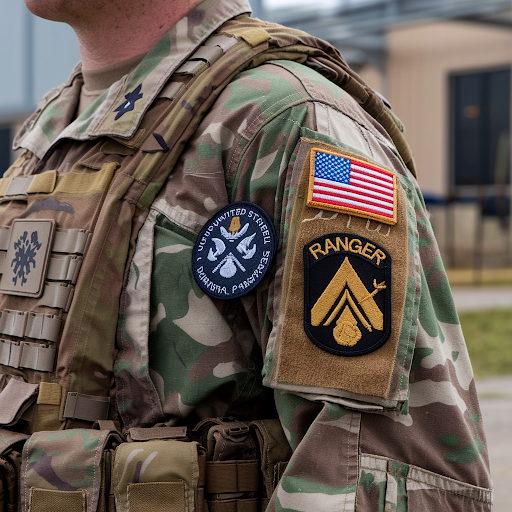
In the armed forces, custom patches are not merely ornamental enhancements. They represent symbols of identity, accomplishments, and distinction. Among the different kinds of military patches, Operational Camouflage Pattern (OCP) patches are unique, providing consistency while delivering functional advantages in both combat and non-combat situations.
But what precisely makes OCP patches so crucial? Whether you’re a service member on active duty or a military enthusiast, knowing the correct OCP patch placement is essential for respecting military decorum.
This detailed manual will guide you on the proper positioning of custom patches on military uniforms, the various types of OCP patches, and their meanings, ensuring your uniform adheres to standards while also reflecting your commitment and service.
What is OCP?
OCP refers to Operational Camouflage Pattern, a flexible camouflage created to merge effortlessly with different surroundings. Launched in the early 2010s, it succeeded the previous Universal Camouflage Pattern (UCP) because of its enhanced performance in various landscapes.
Although the Army and Air Force mainly wear OCP uniforms now, other military services have embraced comparable patterns, highlighting the significance of uniform OCP patch positioning. These patches, varying from unit to rank insignia, are essential for upholding discipline and unity.