UK
UK CA
CA NZ
NZ


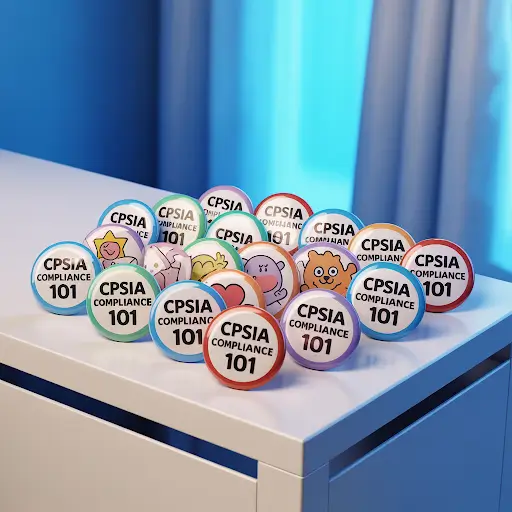
Kids will trade anything, stickers, snacks, sibling secrets. Pins are catnip. Which is exactly why brands can’t treat youth merch like “just another cute SKU.” If your custom pins touch the youth aisle, you’re in compliance country: CPSIA at the federal level and California Prop 65 on the West Coast.
Good news: with the right specs, testing, and labeling, you can protect your audience and your margins, without slowing launches to a crawl.
If you’re still scoping formats and price tiers, start with the basics on our Custom Pins page, styles, backings, and MOQs for schools, camps, and youth programs.
What Counts as a “Children’s Product” (And Why You Should Care)
CPSIA’s definition is basically: made for or primarily marketed to kids 12 and under. So if your custom lapel pins appear in kids’ apparel, school store fixtures, STEM/camp kits, youth club swag, or toy-adjacent packaging, assume children’s product rules. That means:
- Third-party testing at a CPSC-accepted lab
- A Children’s Product Certificate (CPC) you supply to retailers/marketplaces
- Tracking labels (who/when/where you made it) on product/card
- Checks for sharp points/small parts risks for the intended age group
- Heavy-metal limits in metal and coatings
None of that is scary with a decent plan. It’s a process, not a pop quiz.
And while we’re talking wear: if you’re putting lapel pins on blazers for ceremonies, brush up on good form with, useful for school boards, scouts, and honor programs.