
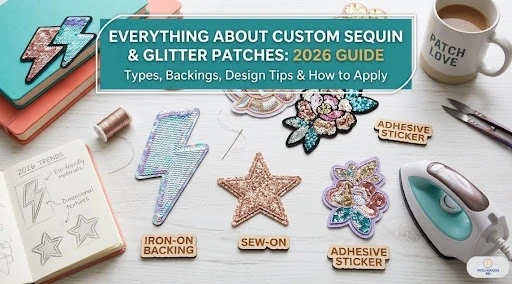
This highly informational guide welcomes those searching for information on custom sequin patches. Elevate your clothing line, uniform, or a DIY project with sparkle that catches looks.
To design and apply these shimmering patches, one requires a bit of know-how for perfect results. Below is everything you must know before making your designs shine.
Custom Sequin Patches: What They Are, Best Designs, Backings, and How to Apply Them
Quick Definition of Custom Sequin Patches
Stitching tiny reflective plastic or metal disks on a strong fabric backing makes custom sequin patches, which are embellishments for decoration and customization at their core. Cut carefully and made into specified shapes, logos, or customized artwork, sequin patches give a vibrant, 3D look that grabs attention quickly across the room.
What Makes Sequins Different From Embroidery
Embroidered patches rely on thread laid flat to form patterns. In contrast, sequin appliqué patches depend on small reflective pieces that reflect surrounding light, achieving a luminous surface effect. Where embroidered work appears matte and classic in look, sequins bring intense shine, shifting when the person moves.
When Should You Choose Sequin Patches Instead of Other Patch Types?
Sequin vs Embroidered Patches
Selecting between the two trendy styles, embroidered and sequin, is entirely dependent on your goal regarding your specific design. Embroidered patches are pros at capturing details, providing a raised classic texture. Woven patches, in addition, are great with complex designs and shading and can easily handle small text.
Meanwhile, sequin patches are the best choice for maximum visibility, texture, and an aesthetic that has a clamor for glamor. You have to simplify your complex details to accommodate for these patches and the size of the disks used.
Sequin vs Glitter Patches
When planning an apparel run, clients frequently ask, “Are glitter patches durable for clothing?” Glitter patches offer a beautiful, continuous, and sandy sparkle, but they can occasionally be prone to flaking over time if subjected to heavy friction or improper washing.
Sequin patches provide a more structured, scaled reflection and generally offer better long-term durability for high-wear garments without leaving a trail of glitter dust behind.
Sequin vs Rhinestone Patches
Rhinestones deliver a premium, glass-like shine but are significantly heavier and require incredibly delicate care to prevent the stones from popping out of their prongs. A sequin appliqué is much lighter, making it the ideal choice for thin fabrics, summer garments, or large back pieces where heavy rhinestones would cause the garment to pull, stretch, or sag.
Types of Sequin Patches You Can Customize
Classic Sequin Patches
Overlapping sequins stitched in a uniform direction makes a standard solid, shimmery design. They work great for corporate logos, geometric shapes, and looks gaining fashion styles.
Sequin + Embroidery Patches
This hybrid style is incredibly popular in the modern apparel industry. By blending a sparkling sequin background with traditional tightly embroidered thread for borders and fine interior details, sequin + embroidery patches give you the best of both worlds: dazzling light reflection paired with crisp, highly readable text.
Reversible Sequin Patches / Flip Sequin Patches
Interactive fashion remains a massive trend, driven heavily by the popularity of reversible sequin patches. These brilliant designs use dual-sided sequins stitched loosely enough to be physically brushed back and forth.
By swiping your hand across the surface of flip sequin patches, you can instantly reveal an entirely different color or a hidden message. They are wildly popular for children’s apparel, novelty merchandise, and interactive brand promotions.
Letter Patches and Logo Patches
On fields and campuses, sequin letters often appear across varsity jackets, cheer outfits, and college-themed apparel. Because of their bold structure, wide-set letterforms handle sequined detailing with ease. Each shiny piece settles neatly within broad outlines while keeping the form clear. Instead of blending into background noise, these embellishments hold distinct presence through contrast and spacing.
Sequin patch design rules that prevent bad results
Why Fine Detail Doesn’t Reproduce Well
Measured between 3mm and 5mm wide, each sequin has a fixed size/diameter. Owing to such limits in production, using them for tiny text or photographic gradients is not very possible, much like sketching delicate lines with a broad brush meant for walls. Always keep your artwork bold, simple, and scaled appropriately for optimal results.
Best File Formats, Outlines, and Contrast
Use formats like AI, EPS, or SVG when sending your artwork to your patchmaker. This helps them achieve the best results when manufacturing your patches. To make the individual sequin shapes stand out among each other, the design should have colors with a high contrast.
Use thick merrowed/embroidered borders to help contain the sequins securely in place. This also gives the patch a clean, retail finish edge.
Color Planning
The sparkling palette should be planned in a simplistic way. 2 to 4 primary colors are a standard among successful sequin designs. Sequin patches look cluttered when too many colors are added into one single design. This dilutes the impact of these reflective surfaces.
Sizing and Placement Guide
Common Sizes by Product Type
Hats are usually designed with smaller patch sizes and remain generally under 2.5 inches tall to match nicely with the natural curve of the front of the cap. Chest placements on jackets, sweatshirts, or vests will typically look good when patches measure between 3 and 4 inches.
When designing larger statement pieces for the rear of jackets (or stage uniforms), the patch size range is generally from 8 inches to 12 inches to add a real visual impact to a uniform.
Placement Tips
Avoid positioning heavy patches where arms move frequently, fabrics bend sharply, surfaces rub often, or washing zones. Adding sequins near the armpit or along a high-stretch side seam can cause irritation to the wearer and harm the patch. Instead, center the design on flat areas with high visibility. Examples may include the upper back, center chest, or brim of a cap.
Backing Options and How to Choose the Right One
Iron-on vs Sew-on vs Velcro vs Adhesive vs Pin
| Backing Type | Best Use-Case | Hold Durability |
| Iron-on | Quick, at-home application on cotton or denim | Medium |
| Sew-on | Permanent hold on all fabric types (leather, nylon) | High |
| Velcro | Interchangeable tactical or work uniform patches | High |
| Adhesive | Temporary event use, acting as heavy fabric stickers | Low |
| Pin | Removable jacket, backpack, or tote bag flair | Medium |
Best Backing by Use-Case
If you are creating temporary merchandise for a weekend event or promotional giveaway, adhesive backings work wonderfully. For premium fashion brands and permanent uniform additions, sew-on backings provide the ultimate peace of mind and security. Iron-on sequin patches sit perfectly right in the middle, offering a great balance of application convenience and reliable hold for casual apparel lines.
How to Apply Custom Sequin Patches Safely
Iron-on Method
To attach iron-on sequin patches, manage the temperature of the iron. High heat may damage the tender plastic disks when ironing on the patch. Turn the garment inside out or cover the top of the sequin patch area with a thick cotton press cloth. Attach sequin iron-on patches without ruining them with the use of a medium-high iron temperature with the steam setting off when pressing. Apply firm pressure to the backside of the patch area for 15-20 seconds, allowing the glue to melt into the fabric fibers before moving or lifting the item from the heat plate for any reason.
Sew-on Method
Sew-on sequin patches are the most durable option for heavy denim jackets, thick leather, or other similar items that are machine washed every week. Sew the patch around the edge border instead of sewing the actual sequins. Attach the patch securely in place for a long time with a simple running stitch or a tight zigzag stitch done with a home sewing machine.
Glue/No-Sew Method
The use of a specialty fabric glue is acceptable if you cannot heat and use an iron or needle and thread to make your decorative items (such as stiff tote bags or display hats), which are rarely washed, stick together.
However, fabric glue will usually not work properly on flexible items such as high-stretch items or on extremely active sportswear due to the stretching movement that occurs, causing a breakage in the connection made with the adhesive.
How to Wash and Care for Sequin Patches
Hand Washing vs Machine Washing
Cold water plus a gentle detergent makes hand washing best for sequin applique patches, keeping the life and shine longer. Though machine cleaning risks damage, turning clothes inside out helps when needed. A mesh laundry bag also offers shielding during spin cycles if used. The softest setting works well alongside low temperatures. Protecting sparkle begins with careful choices at each step.
What to Avoid
Heat from a dryer risks damaging clothes with sequin patches. It can cause issues like patch warping, colors getting dull, or the sequins melting. The heat can also weaken the adhesive backing underneath. Harsh cleaning agents, chlorine-based whiteners, or pressing directly on the decorated surface may cause further harm. Always air dry them flat on a towel. You can also hang them gently on a hanger. This prevents shrinkage and shape deformity.
Frequently Asked Questions
Get a Quote for Custom Sequin Patches
Are you excited to make your glittery, creative designs a reality? Patch Makers USA offers several options for creating a variety of vibrant and fun flip sequin patches, quick use with permanent sequins on iron-on sequin patches for clothing launches, or searching for outstanding custom sequin patches USA.
When finding custom sequin patches made in USA, you will find the production team at Patch Makers USA experts in making excellent quality and durable custom patches from the very first stitch to the last. Contact our team today to start your order and get a free quote!
