
Can You Iron On Patches on Polyester?
Yes, you can attach an iron-on patch to polyester, but with caution, as heat sensitivity defines how polyester reacts under an iron. A patch may bond if temperature control is precise. Protection between the fabric and heat source becomes essential during application. Molecules in synthetic materials shift when warmth rises too high. Iron settings must stay low enough to avoid surface damage. Polymer structures respond differently than natural fibers under pressure. Success depends on timing, barrier use, and equipment accuracy.
A different method is needed when handling polyester compared to denim patches, since applying heat seal backing might melt the fibers. This damage often leaves behind a lasting glossy surface on the material. In extreme cases, the distortion becomes so severe that restoration proves impossible.
The effective heat level for securing a patch depends entirely on reaching a precise point at which the patch’s adhesive flows without altering the fabric’s form. Only when heat is balanced correctly does proper bonding occur, avoiding damage beneath.
It is commonly questioned, do iron-on patches stick to polyester? Yes, they do, and this happens due to the shared synthetic nature between patch glue and the material. A firm bond results if proper application methods are followed. Compatibility arises because both components respond similarly under heat.
Guidance to Iron-On Patches for Polyester
Most of the guides for attaching iron-on patches found on the internet provide the user with generic recommendations that result in melted fibers or ruined garments because they do not account for the differences in heat sensitivity among synthetic materials.
This comprehensive guide will provide you with the information you need to attach iron-on patches to polyester using proper temperatures, protective barriers, and specialized techniques to produce a permanent bond. You will learn exactly how to iron on patches to polyester without causing the dreaded fabric shine or warping.
What You Need Before You Start
To prepare for the application process, you need to have all of the necessary tools ready to avoid having a disaster during project completion. You need an iron or a professional heat press, a pressing cloth (or piece of parchment paper), and a flat/firm surface on which to apply the heat and pressure to adhere your patch. An ironing board can work well for this process.
Typically wooden tables covered with a thin towel will allow you to apply greater pressure for better adhesion than an ironing board will. If your iron’s dial is vague, you may also want to consider using a digital temperature gauge.
When choosing your patch, look for those that have a high-quality heat seal-back rather than a basic plastic film because these melt at lower temperatures than plastic films do. You will also need to know what type of fabric blend your garment contains.
Garments made of 100% polyester are much more sensitive to heat than 65/35 poly-cotton blends are. Fabric blends of poly-spandex (for athletic wear) are even more sensitive to heat due to the elastic content of the fabrics.
Finally, always pre-wash and dry your garment without using fabric softener to remove any factory chemicals that may prevent the heat-activated adhesives from adhering to the garment.
How to Iron On Patches on Polyester: Step-by-Step
The first step for how to iron-on patches on polyester is to begin by turning off the steam function and adjusting the temperature range to 250°F to 275°F (110°C to 130°C) on the iron.
Moisture weakens the adhesive, and high heat melts polyester, so avoid steam and high heat altogether. With the heating element prepared, lay the clothing item out smoothly on a steady platform. At this point, alignment matters, so settle the patch precisely into its intended spot over the fabric.
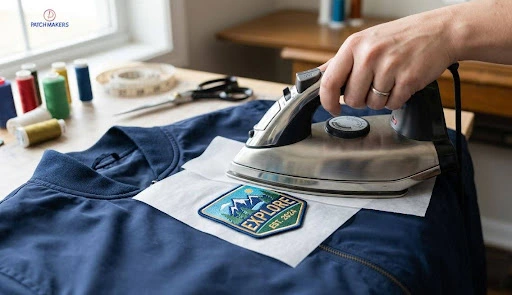
The second step is to use a protective layer of pressing cloth for polyester or parchment paper to cover the patch before proceeding. Move to the third step with care. Heat is applied using an iron held steady for between fifteen and twenty seconds.
Movement across the surface should not occur, and pressure needs to remain fixed throughout the process. Protection of adjacent material happens naturally through even contact without shifting.
Downward pressure prevents displacement of the warmed polyester section. Facing inward, treat the article beneath its surface layer. Apply heat for fifteen to twenty seconds so bonding strengthens between the custom patch and the polyester surface.
After the last heating phase, the fifth step is to wait two full minutes. This pause lets the glue bond properly. Only then should the item be touched or shifted. To check adhesion, gently slide a fingernail along each edge.
When loose spots appear, applying heat once more for just ten more seconds will suffice. The cycle may need repeating until all areas stay flat. Patience here prevents later failure.
Temperature Guide by Polyester Blend Type
Below is the optimal and safe iron temperature for polyester:
| Fabric Type | Iron Setting | Temp (°F/°C) | Press Time | Steam? |
| 100% Polyester | Low / Silk | 250°F (121°C) | 15 Seconds | No |
| 65/35 Poly-Cotton | Medium / Wool | 280°F (138°C) | 20 Seconds | No |
| Poly-Spandex | Lowest Setting | 230°F (110°C) | 10 Seconds | No |
Ironing Patches on Specific Polyester Items
Occasionally, greater force becomes necessary when attaching a patch to items made of polyester jackets or bombers, for instance. This happens due to dense inner layers typically present in such clothing.
Heat transfer is often blocked by thick linings or coatings designed to resist moisture. As a result, standard methods might fail without increased firmness during application.
Avoid heat damage when applying an iron-on patch to a polyester bag by considering internal layers. Since many feature thick plastic linings prone to melting under pressure, separation becomes necessary. Inserting a stiff paperboard or another flat barrier inside prevents fusion between inner surfaces. This step keeps materials from sticking where they should not.
Protection beneath the fabric ensures cleaner results without unintended adhesion. When choosing where to place the patch, stick to a flat section of the bag and avoid pockets or seams, which can create uneven pressure during application. Fabric meant for athletic wear often prioritizes airflow, which usually means it is lightweight. Since such material can be delicate under high temperatures, applying intense heat may damage its structure.
To prevent harm, set the iron to its gentlest setting before beginning. Mesh weaves found in jerseys respond better when treated with minimal thermal exposure. Lower temperature reduces the risk of melting or puncturing the textile during attachment.
A curved surface often complicates heat application when attaching a patch to a polyester head covering. For steady pressure, insert a tightly rolled towel beneath the fabric layer. This support helps secure even contact during bonding.
Heat Press vs. Regular Iron-On Polyester: Which Is Better?
| Feature | Household Iron | Professional Heat Press |
| Pressure | Manual/Inconsistent | Mechanical/Uniform |
| Temp Control | Estimated/Variable | Digital/Precise |
| Efficiency | Best for single items | Best for bulk/business |
| Safety | Higher risk of scorching | Lower risk due to timers |
Heat presses are considered much better than regular irons for applying graphics to polyester fabrics because they provide the most consistent amount of pressure over the entire area of transfer and consist of a precise digital temperature control feature. These are two of the most important aspects of preventing damage to the fabric when using a heat press versus an iron.
A heat press is also preferred by business owners who are producing multiple items or bulk orders, as they can guarantee that all items produced through the heat transfer process using a heat press will have an identical finished product, unlike an iron, which has more variation.
What If You Can’t Use Heat? 3 Alternatives for Polyester
When working with fabrics sensitive to warmth, a dilemma occurs between the use of iron-on or sew-on attachments. Stitching prevents harm caused by temperature exposure during heat seal attachment. Such a method ensures lasting results without risking material integrity. Because of these benefits, experts often suggest sewing or hand-stitching patches on polyester when thermal application fails to bond properly. A needle and thread avoid deformation while maintaining appearance over time.
Starting differently, consider a specialized fabric glue like E6000 or Gorilla Fabric Glue. Though not required, heat plays no role here. These create durable, bendable connections that survive laundering. Another path involves fusible webbing or hem tape instead. With these, verifying compatibility with man-made textiles becomes necessary before proceeding. Despite appearances, suitability depends heavily on fabric type.
Usually, those who sew at home wonder whether hem tape functions on polyester materials. Yes tends to be the usual answer. Protection matters still. Hence, do use a pressing cloth just as described earlier before bringing heat near the patch, buttons, or the polyester surface. This step helps keep them safe and intact.
A fourth option for heat-sensitive polyester is a peel-and-stick patch. These come with a built-in adhesive backing, so there’s no ironing or sewing involved, just position and press. They’re the fastest method, but keep expectations realistic: this backing isn’t as durable as a heat-sealed or sewn patch, so it works best on items that won’t be washed often.
Common Problems & How to Fix Them
A patch that is peeling or slipping at the corners may fall off because you might not have pressed firmly enough or have used a low-temperature setting during application. Try pressing down more heavily. Choose the optimal heat and press enough to avoid the patch falling off. The fabric may become shiny or melted if the temperature setting is exceeded for the material type.
Shiny patches are usually not easily repaired. However, a light steaming of the fabric (without direct heat touching) sometimes can raise the fibers back to their original position. If you have adhesive residue remaining from either an unsuccessful patch application or intend on removing the patch, there are a variety of ways to do so.
A specialized adhesive remover kit or placing a paper towel over the patch and flipping it over onto a heated surface for a very short period of time can assist in removing any remaining glue.
How to remove iron-on transfers from polyester typically involves pressing again the heat transfer and removing it while the adhesive is warm, followed by cleaning the area for glue residue with rubbing alcohol or adhesive-remover liquids.
Using Iron-On Patches to Repair Polyester Clothing
Iron-on patches are best for polyester patch repair, as fabric mending often relies on adhesive-backed pieces when working with synthetic materials like polyester. When flames or sharp edges leave marks or holes on your wearables or gear, heat-activated fixes may cover minor surface damage.
For seamless results, match the overlay closely to the original weave and shade of the garment. A design element, placed intentionally, might shift attention away from flaws instead. Appearance matters less when function stays intact.
Begin by removing loose strands when mending a split in polyester material. A heat-activated fix takes less time compared to hand sewing, delivering durability beyond the base cloth. Patch application follows thread removal without delay. To avoid loose edges and fraying, go for a merrowed edge border, as it gives both a perfect finish and no fraying.
How to Wash and Care for Patched Polyester Garments
Once the patch is applied, waiting helps secure its hold over time. Using the right ideas to care for your custom patches helps them last longer. A period of one to two days should pass before cleaning, allowing the glue to fully set on the fabric. During the washing stage, position the garment folded inwards during the cycle to reduce wear along patch borders. Turning the garment inside out before washing also helps. It reduces friction against the patch edges during the cycle.
The gentle wash cycle works best with cold water for each wash. Avoid bleach and fabric softener, as they weaken the glue used for custom patching. Though polyester tolerates machine drying well enough, choosing airflow alone or minimal warmth keeps adhesives safe. Heat from tumbling too hot risks softening bonds, possibly letting patches shift or peel after repeated exposure.
Frequently Asked Questions
Need Custom Patches Made for Polyester Fabrics?
It is now time to make a decision! If you are ready to upgrade your apparel or ready to launch a new merchandise line with custom iron-on patch designs, having a trusted manufacturer to work with will make all the difference!
At Patch Makers USA, we offer specialized options for athletic apparel, jackets, and backpacks. Our heat-seal backing is made from a high-quality material that has been designed with the right combination of heat and adhesive, so you will be able to create your custom patches without the use of very high temperatures, which damage your polyester clothes.
To get started today, shake hands with our team, and we guarantee that your next project will not only look professional but will also last a long time.
